The 22nd ZagrebDox Film Festival Has Begun: Monday at the Festival
20.4.2026.
The 22nd ZagrebDox has officially commenced and, over the next week at Kaptol Boutique Cinemas, will present 112 documentary films across 16 program sections. The program was selected from nearly 2,000 submitted titles and once again offers a carefully curated cross-section of some of the most compelling recent works in international documentary production.

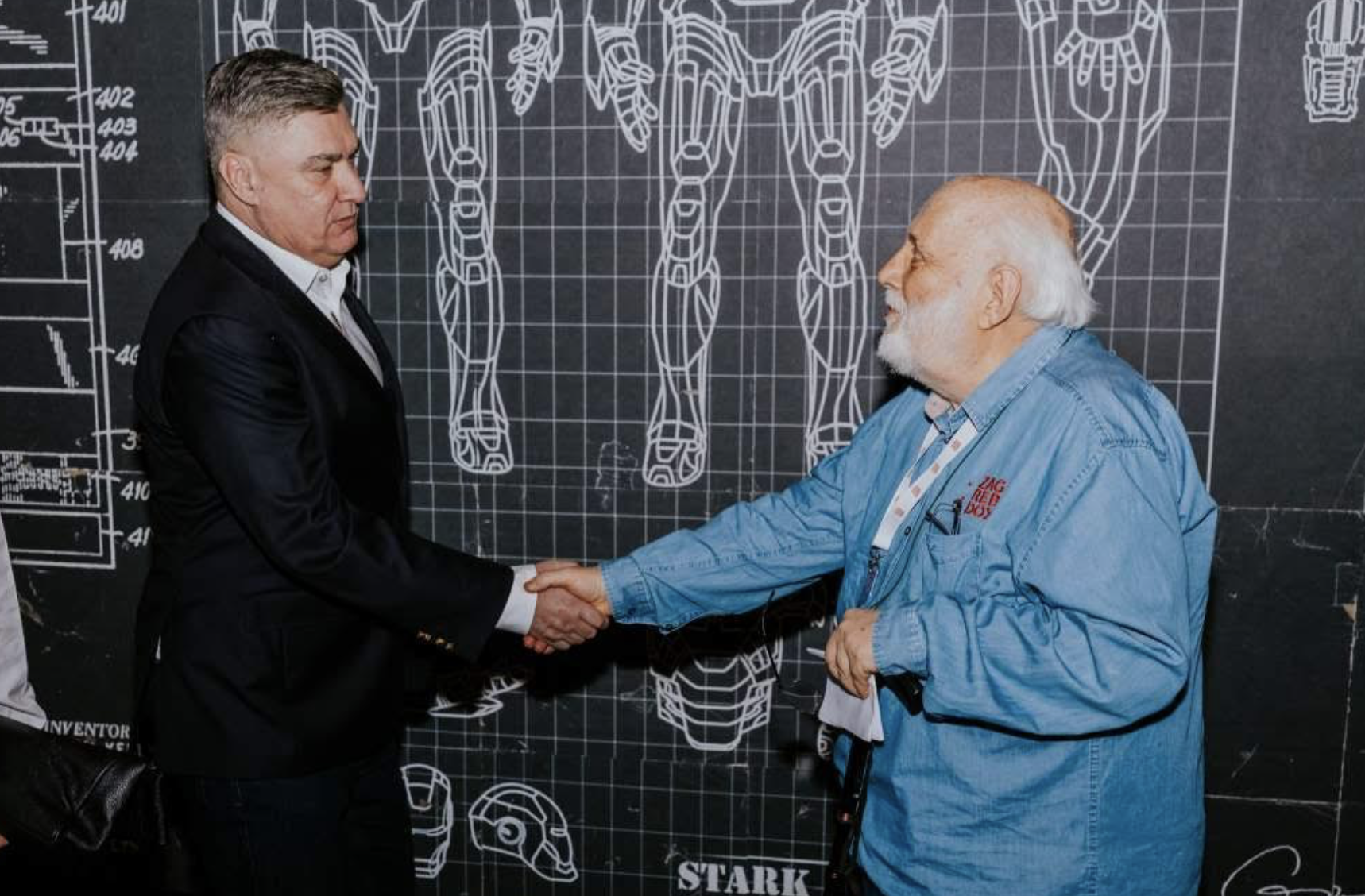
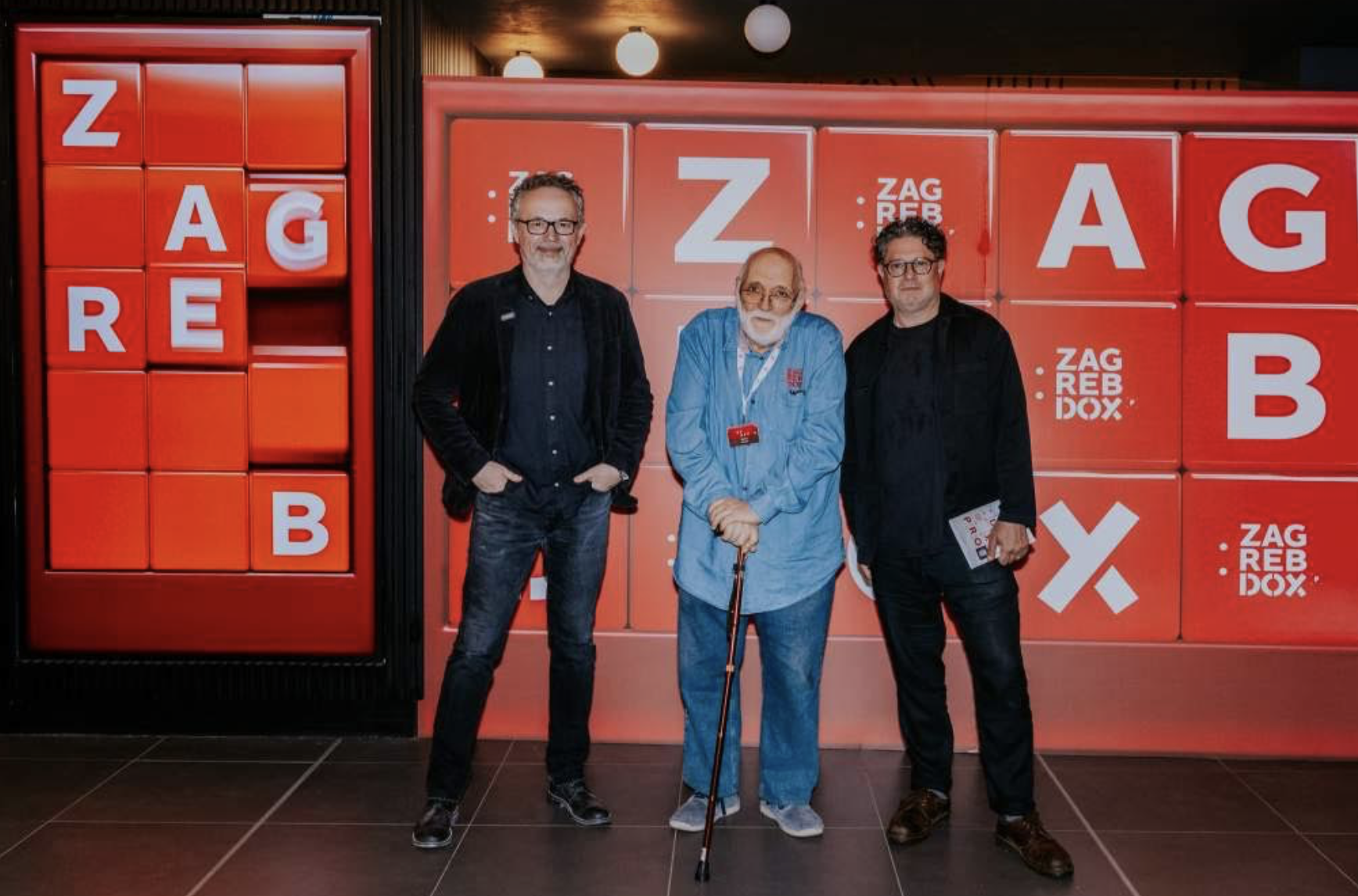
Twenty films in the International Competition and eighteen in the Regional Competition are vying for the festival’s grand prize, the Big Stamp. Audiences can also look forward to a series of special screenings, thematic programs, lectures, and conversations with filmmakers. The opening ceremony featured the film Synthetic Sincerity by director Marc Isaacs. Those in attendance included the President of the Republic of Croatia, Zoran Milanović, the Deputy Mayor of the City of Zagreb, Luka Korlaet; the President of the Council of Zagreb, Matej Mišić, the Director of the Croatian Audiovisual Center, Chris Marcich, Swiss Ambassador Beatrice Schaer, and documentary filmmaker Christian Frei. They were welcomed by Artistic Director Nenad Puhovski and Executive Director Hrvoje Pukšec.
“Somewhere around this time in 1994, one of my studentsreturned from the front. He was a talented and witty young man who, in his first year, had already made a succinct, precise, and intriguing documentary. But then, in the period I am speaking of, it was as if someone else were standing in front of me. His voice was quieter, his movements were slower, and his eyes were almost blank. Although I was no longer his professor, I invited him for coffee. We spoke about many things. But we did not talk about the war. He told me he was leaving for Germany, where most of his family lived, and that he would most likely never return to film. When we were saying goodbye, he looked at me and said: You know, Professor, I’ve realized — people don’t die in slow motion. We parted and never saw each other again. I tried to find him to no avail. And that sentence, which I often remember, has remained a summary of the time we live in. On the one hand, there the world of cinematic, artificial reality — slow motion, deep fakes, and artificial intelligence. On the other, there is an increasing amount of violence. There are wars where real people die. People of flesh and blood. Without cinematic interventions. At a time when more than five million hours of video are uploaded to YouTube every single day, when an entire documentary can cost as much as a single Oscar ceremony, when newsrooms have to decide which global war zone they can even afford to cover, and when the line between the artificial and the real has never been more opaque — programming a documentary film festival is more demanding than ever. But it is precisely then that we realize that we are only the pre-selectors. Because, fortunately, we have an audience that not only believes in what we do, but also knows how to recognize, choose, and judge for itself. And that, in fact, makes things easier. Because — not only at the festival — in this uncertain world, we still remain bound to each other. That is why we are opening this festival with a film about artificial intelligence. We are closing it with a film about the war in Ukraine. Travel with us,” said Nenad Puhovski.
Deputy Mayor Luka Korlaet congratulated the festival's organizers on twnety years of continuous activity, noting that 3,000 films have been screened and around 400,000 viewers have attended it over the years. He emphasized the importance of the content the festival brings, describing it as a space that expands perspectives and functions as both a “telescope” and a “microscope” through which we better understand the world. He singled out this year’s program of 112 films and the Dox of Resistance section, which addresses the challenges of contemporary society and everyday life. He also referred to investments in cultural infrastructure, highlighting the renovation of Kino Europa and the announced renovation of Kino Tuškanac, and declared the 22nd ZagrebDox officially open.
The screening of Synthetic Sincerity was introduced by Marc Isaacs himself, who presented the context and the idea behind the film. Isaacs pointed out that in 2024, after seeing an AI-generated video of a man in a bar immersed in thought, he began to reflect on the future of filmmaking in the era of artificial intelligence. “What does the future hold for us, as filmmakers, in a world where cameras may no longer be necessary, nor the real world, nor people, nor conversations with them?” Isaacs said, adding that this prompted him to think about the “death of representation” in film.
The first full day of this year’s ZagrebDox opens with innovative titles from the Audio Dox and Photo Dox programs, which place radio documentaries, spoken essays, and photography exhibitions into the traditionally elite space of film theaters. In the familiar setting of Kaptol Boutique Cinemas, audiences will be able, starting at 1:30 pm, to listen to the documentary radio drama Clean Up Your Game: All In! (Hall 4) by Dražen Krešić. In this premiere attempt to situate sound documentary in a cinema auditorium, Krešić follows six months in the life of a young man who is seeking treatment for his gambling addiction. After the screening, the audience will be able to hear more about radio documentary and the contemporary challenges of addiction.
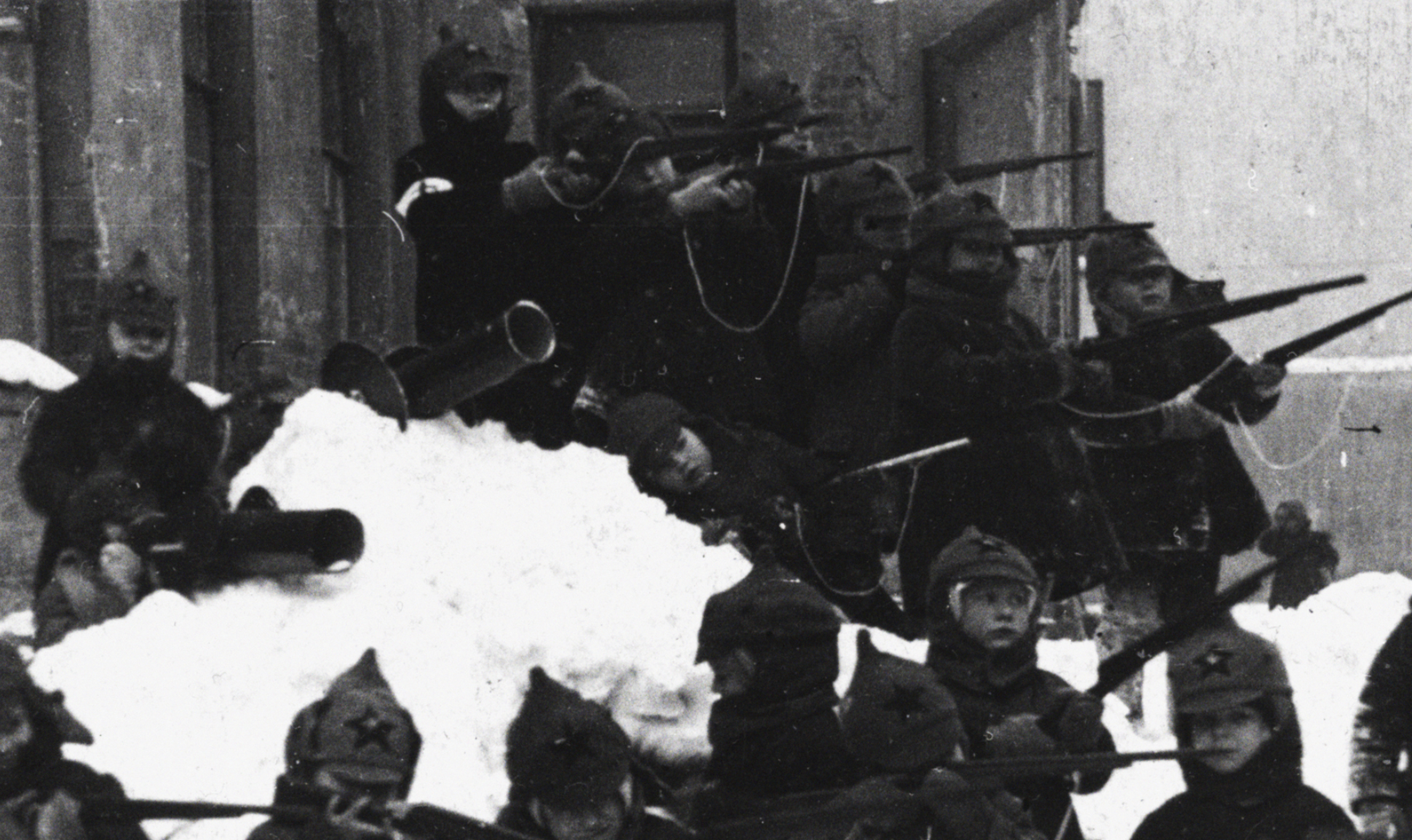
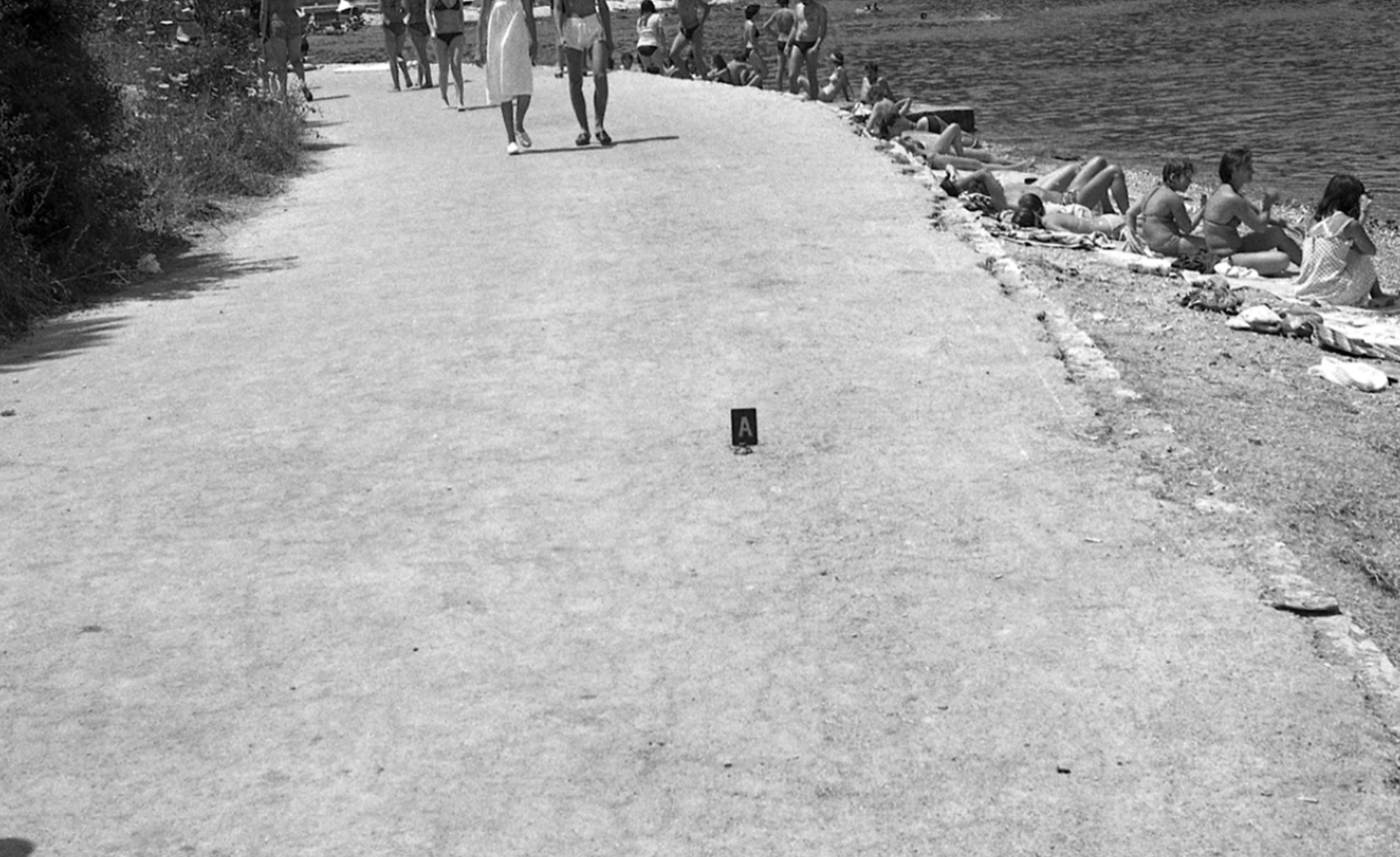
The rich parallel program brings Photo Dox exhibitions Lost Territories Archive (Hall 5) and Points of Impasse (Hall 4). In Lost Territories, the international photography collective Sputnik Photos uses imagery inspired by archival photographs to explore the cultural topography of Eastern Europe and the visual legacy of the USSR. In Points of Impasse, Bosnian photographer Armin Graca interprets the thousand kilometers of the border established by the Dayton Agreement as a starting point for examining identity and the impact of partitioned territory on cultural self-definition. The film program of this year’s festival begins at 1:30 pm with the Ecuadorian title Carmela and the Walkers (Hall 1) by directors Luis Herrera and Esteban Coloma. As part of the State of Affairs program, which incisively explores contemporary politics, culture, and everyday lives, the film follows Carmela, a woman who has aided thousands of migrants walking across South America at the border between Ecuador and Colombia. A series of unexpected circumstances forces Carmela herself to flee to Colombia, and the challenges faced by a woman confronted with economic pressures, social crises, and a complex past become a metonymy of migration and personal resilience.
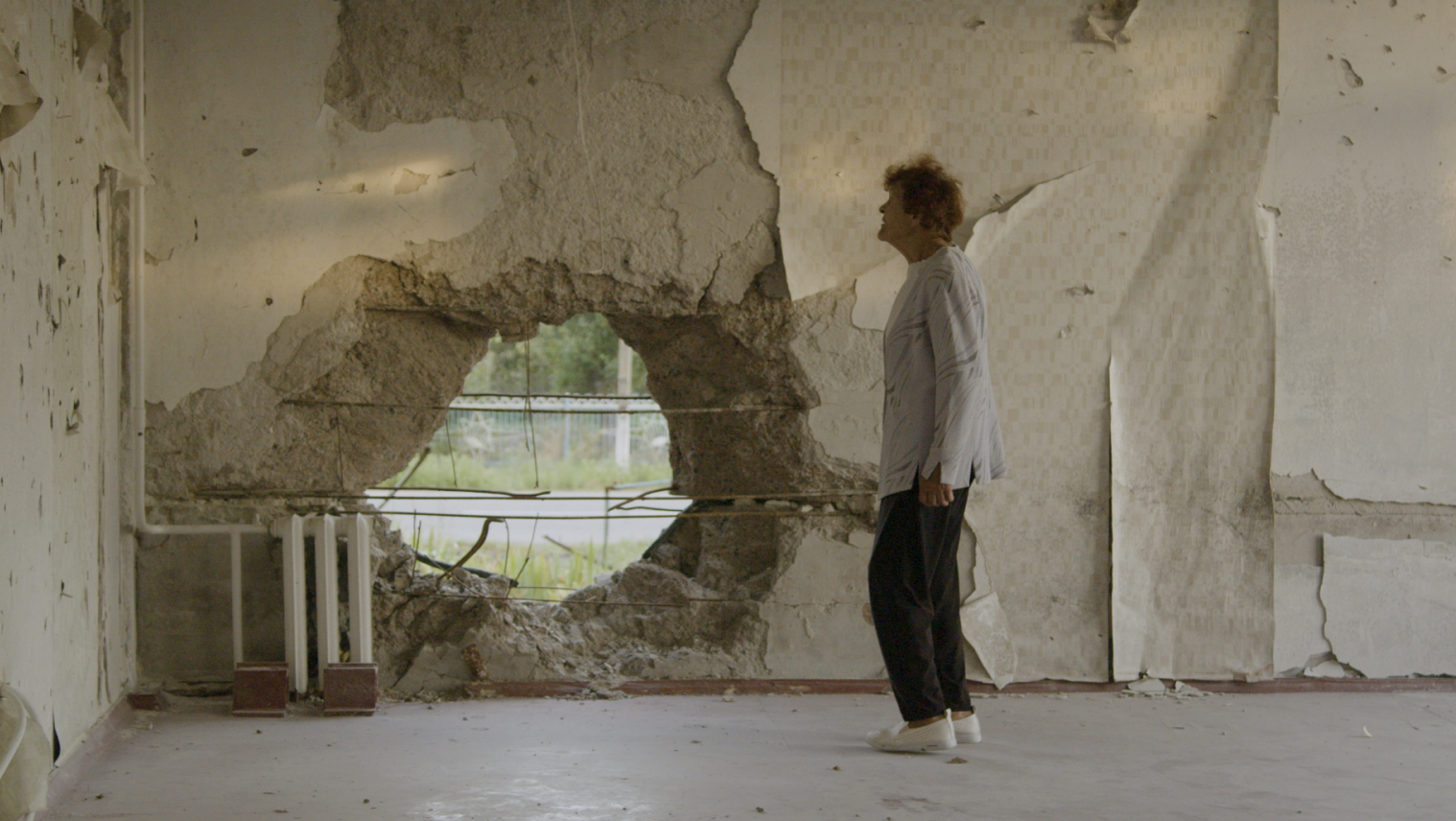
The Regional Competition begins with the short film Lavender (Hall 3) by Mateja Raičković, where motifs of nature guide the director along an intimate journey of restructuring her identity and coping with trauma. The theme of trauma reappears in the harrowing Traces (Hall 3) by directors Alisa Kovalenko and Marysya Nikitiuk. Within the new Dox of Resistance Program, which records acts of resistance to various forms of oppression, Traces represents the voices of Ukrainian women who survived sexual violence and gender-based forms of torture during Russia's assaults on Ukraine. Guided by Irina Dovhan, a former detainee who has dedicated herself to defending women who endured similar experiences, Kovalenko and Nikitiuk transform testimonies of war crimes into a healing space of mutual support, resilience, and dignity in the face of unimaginable conditions. Audiences can also listen to Misfortune, Level 2 (Hall 5) by Violette Gitton. In ironic alignment with its title, Gitton recorded this radio documentary in the clinic where she was hospitalized due to a sudden deterioration of her psychological state. The polyphony of voices of her disembodied interlocutors, marked by considerable humor, challenges stigmas related to mental health and examines established forms of psychiatric treatment through the prism of stereotypes and compassion.
The first day continues in the same rhythm throughout the afternoon and evening, with screenings across various sections and thematic programs, world premieres, exhibitions, and discussions with filmmakers and critics, concluding at 9:30 pm with All My Sisters (Hall 3) by Massoud Bakhshi and Punk Under the Communist Regime (Hall 1) by Andrej Košak. The International Documentary Film Festival ZagrebDox takes place at Kaptol Boutique Cinemas through April 26, 2026. ZagrebDox is held with the support of the City of Zagreb, the Croatian Audiovisual Centre, the Croatian Film Directors’ Guild, and the Zagreb Tourist Board. All updates and information about ZagrebDox are available on the official website and the festival’s social media channels.
















.png)
.png)


.png)

.png)
.png)





.png)












.png)










.png)


.png)
.png)









.png)